Hibachi vs Teppanyaki: What Is the Difference?
A simple guide to the terms people use for Japanese-style grill entertainment, restaurant cooking, and private hibachi parties at home.
Quick Answer
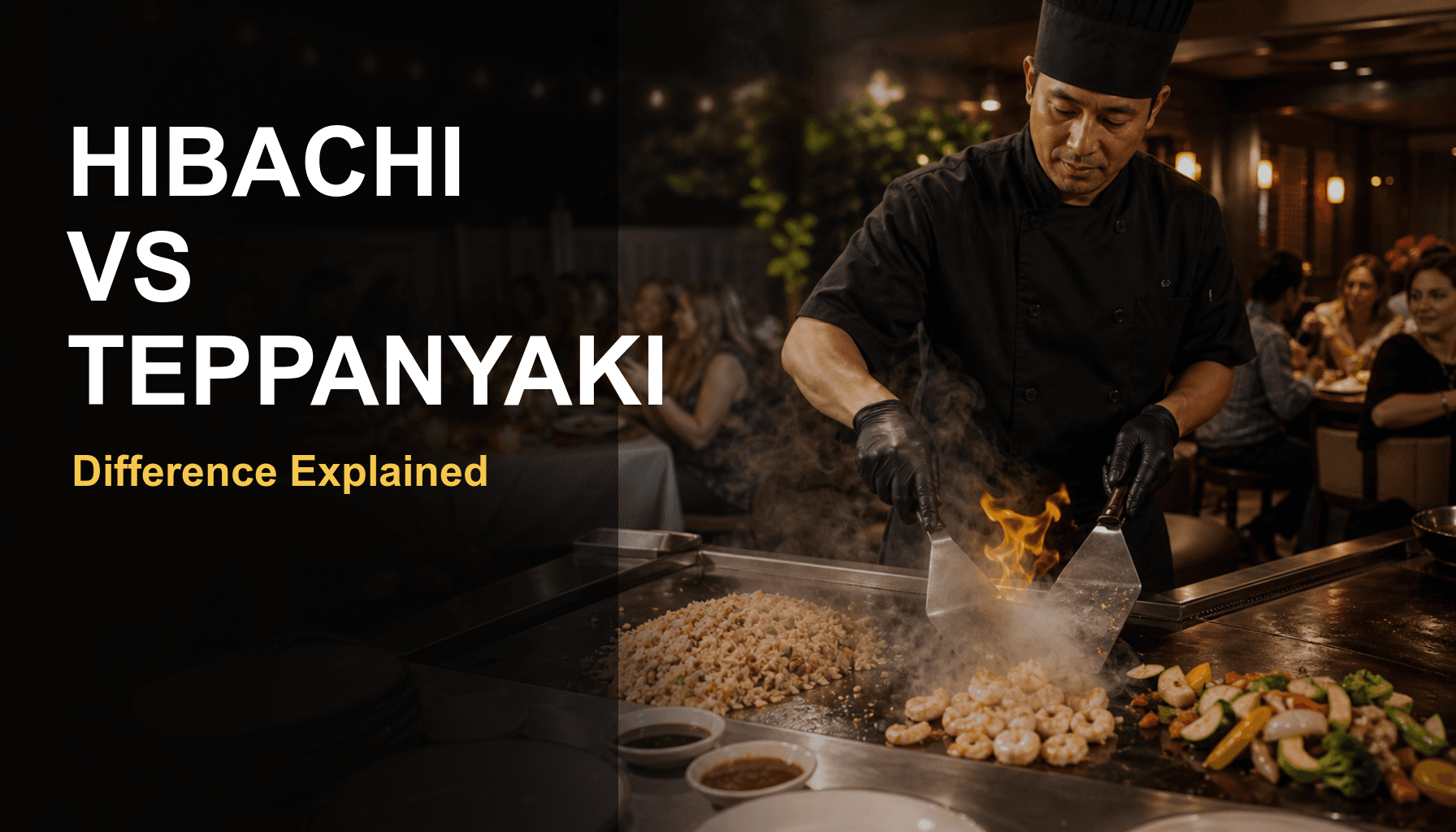
In the United States, people often say "hibachi" when they mean a live flat-top grill cooking show. Technically, that restaurant-style cooking is closer to teppanyaki. For at-home parties, however, "hibachi catering," "private hibachi chef," and "teppanyaki catering" usually describe the same experience: a chef cooking fresh food in front of guests with live grill entertainment.
| Term | Traditional meaning | Common U.S. meaning |
|---|---|---|
| Hibachi | A small charcoal heating or cooking vessel | Live Japanese-style grill party or catering experience |
| Teppanyaki | Food cooked on a flat iron griddle | Chef performance with steak, chicken, shrimp, fried rice, vegetables, and sauces |
| Private hibachi chef | A mobile chef who cooks for your group | At-home teppanyaki-style grill entertainment |
What Hibachi Traditionally Means
The word hibachi originally refers to a compact charcoal brazier. It was not the same as the large flat grill most guests picture today. Traditional hibachi cooking is more direct-heat grilling, while the modern party experience is built around a larger cooking surface and a chef performing in front of the group.
What Teppanyaki Means
Teppanyaki comes from cooking on an iron plate. In restaurants, this is the style where chefs prepare steak, chicken, seafood, vegetables, rice, and sauces directly in front of guests. The chef may add knife work, grill tricks, timing, and presentation to make the meal feel like dinner and entertainment at the same time.
Why People Call It Hibachi Anyway
In everyday American use, "hibachi" has become the popular shorthand for the teppanyaki-style experience. That is why customers search for hibachi restaurants, hibachi catering, hibachi at home, and private hibachi chef even when the cooking surface is a flat-top grill.
- The word hibachi is easier for many guests to recognize.
- Restaurant menus and local search listings often use hibachi for the live grill experience.
- Catering companies use hibachi because customers use that term when booking parties.
- For event planning, the guest expectation matters more than the technical distinction.
What This Means for an At-Home Party
When you book Hibachi Now, you are booking the experience most guests expect from private hibachi catering: a chef brings the grill setup, cooks the meal fresh on-site, and turns dinner into a live cooking show. Guests choose proteins, enjoy fried rice, vegetables, salad, and sauces, and watch the chef prepare everything in front of the group.
Which Term Should You Use When Booking?
Use the term your group understands. If your guests say "hibachi party," "hibachi chef at home," or "backyard hibachi," that is the right language for planning the event. If someone asks about teppanyaki, you can explain that the cooking style is teppanyaki and the party is commonly called hibachi in the U.S.
Bottom Line
Hibachi and teppanyaki are different terms, but in modern event planning they often point to the same kind of party: a chef cooking on a flat-top grill for guests with fresh food and live entertainment. If you are planning a private event, the most important question is not the label; it is whether the service includes the chef, grill setup, menu, timing, and space requirements your group needs.
FAQ
Is hibachi the same as teppanyaki?
Not technically. Teppanyaki is the flat-top grill cooking style. In the U.S., many people use hibachi to describe the same live grill experience.
What should I ask for when booking a private chef?
Ask for private hibachi catering or a private hibachi chef. That language is widely understood for at-home grill entertainment.
Does Hibachi Now provide the grill?
Yes. The chef brings the grill and cooking setup. Guests should prepare tables, chairs, plates, utensils, napkins, and drinks unless rental has been confirmed separately.
Ready to Experience Hibachi Catering?
Book our professional hibachi chefs for your next event and create unforgettable memories.
Book Your EventQuestions? Call us at (954) 849-9286